020-7828 4925|Store Opening Hours|Glossary
Est. 1985 - the Kind of Service of which Legends are Made
020-7828 4925|Store Opening Hours|Glossary
Est. 1985 - the Kind of Service of which Legends are Made



Latest News
Simon Stafford casts an eye across the new Nikon D700 digital SLR
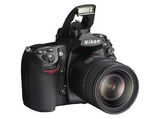
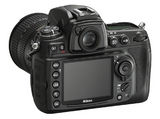
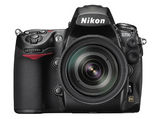
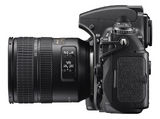
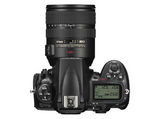
Recently I was fortunate to take my first close up look at a pre-production sample of the Nikon Q610, which is Nikon's internal production code for the new D700. Picking up Sample No. 190 made me think immediately of the D300; it was a fraction taller and with a slightly greater girth but otherwise externally the body design and layout of the controls is very similar. Anyone familiar with the D300, or for that matter even the D200, will have no difficulty in getting to grips with the D700 and be shooting pictures in a matter of minutes but then nor would a regular D3 user!
Externally there are precious few hints to differentiate the new camera from other recent top of the range models introduced to the Nikon D-SLR range; those that do exist are subtle, such as the metamorphosis of the metering mode switch to become a collar around the AE-L / AF-L button located on the top rear edge of the camera back, and the sprouting of an independent button just below the AF-area mode selector switch that is used to activate the Shooting Information Display. Astute observers will notice the profile of the top plate of viewfinder head and the circular viewfinder eyepiece that accepts DK-19 rubber eyecup, which has a built-in viewfinder eyepiece blind, apparently taken straight from the D3. Likewise another migrant from the D3 is the multi selector button with its separate center button.
Similarities do not end there as internally the D700 shares much with the D3: it uses the same 12.1Mp, FX-format sensor with 12-channel output, with the same ISO (100 - 25,600) range, 12-bit / 14-bit ADC and subsequent 16-bit in-camera Expeed processing regime, along with the same AF system, Scene Recognition System, Picture Control System, Active D-Lighting, 3-inch 920,000-dot TFT LCD monitor screen, and Live View system with Tripod and Handheld modes), and an electronic virtual horizon indicator.
- After reading that specification I expect that the first question on the tips of most tongues is likely to be - what sets the D700 apart from the D3? In this respect it is probably easier to look at what the D3 provides that the newcomer does not:
- All metal body and chassis
- Higher standard of sealing against dust and moisture
- 100% viewfinder view
- 5:4 crop mode
- 9 fps (11 fps in DX-format)
- Built-in vertical grip
- Significantly more powerful battery (EN-EL4a)
- Support for Type I & II Compact Flash cards
By contrast the D700 offers the following features that are not found on the D3:
- Lightweight, compact body with polycarbonate used for the viewfinder head plate, side panels to the camera body and memory card port door.
- Self-cleaning sensor unit
- BM-9 monitor screen protector
- Built-in flash (can be used to control compatible remote Speedlights)
- Optional battery pack
However, for those who harbour thoughts that the D700 delivers a D3 in a more compact body and at a significantly lower price you should think again! Despite the welcome arrival of the D700 the uncompromising specification and armour-plated build quality that engenders such a sense of purpose and invincibility about the D3 continue to set it apart from the rest of the Nikon pack. The D700 fills the gap between the D3 and D300, offering a lightweight, portable, FX-format D-SLR, for the professional and high-end enthusiast market. The D700 has the heritage to be an outright winner in this class and Nikon have every reason to feel very bullish about its prospects - I, for one, cannot wait for the chance to use it properly!
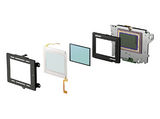
However, before you rush out and place your advance order for a D700 stop to consider the few but in my opinion significant differences to its illustrious sibling, the D3. Probably the most important of these is the reduced viewfinder coverage offered by the D700, which has a scaled up version of the self-cleaning sensor mechanism (its actually the optical low-pass filter that is vibrated not the sensor) from the D300; however, due to the fact that the framework of the mechanism protrudes further forward, as a consequence of its larger size, it constrains the light path inside the camera by limiting the size of the reflex mirror causing the viewfinder field of view to be restricted to only 95%. For some users this may be a major consideration when deciding between the D700 and the D3. Other factors to consider include the lack of the higher frame rates, dual memory card slots, 5:4 crop-mode, and voice memo feature on the D700, plus its reliance on the EN-EL3e Lithium-ion rechargeable battery, unless you add the MB-D10 with EN-EL4a battery.
A full review will follow as soon as a full production model is available.
Nikon D700 Specification
The basic specification of the new D700 is set out in the following table, with details of the D300 and D3 alongside for the purposes of comparison.
Significant differences between the D700 and D3 are highlighted in red.
| Feature | D300 | D700 | D3 |
| Effective Pixels | 12.3 million | 12.1 million | 12.1 million |
| Format | Nikon DX | Nikon FX Nikon DX |
Nikon FX Nikon DX 5:4 |
| Sensor | CMOS | CMOS | CMOS |
| Self-cleaning sensor unit | Yes | Yes | No |
| Image Size (max) | 4,288 x 2,848 | 4,256 x 2,832 | 4,256 x 2,832 |
| ISO | 200 - 3200 | 200 - 6400 | 200 - 6400 |
| High ISO | Yes - up to ISO6400 | Yes - up to ISO 25,600 | Yes - up to ISO 25,600 |
| Low ISO | Yes - down to ISO100 | Yes - down to ISO100 | Yes - down to ISO100 |
| Storage Media | CompactFlash - Type I & II | CompactFlash - Type I only | CompactFlash - Type I & II |
| UDMA support | Yes | Yes | Yes |
| Dual card slots | No | No | Yes |
| Storage System | Uncompressed lossless compressed, compressed NEF, TIFF, and JPEG | Uncompressed lossless compressed, compressed NEF, TIFF, and JPEG | Uncompressed lossless compressed, compressed NEF, TIFF, and JPEG |
| 12-bit and 14-bit options with NEF Raw recording | Yes | Yes | Yes |
| Start-up time | 0.13 sec | 0.12 sec | 0.12 sec |
| White Balance | Auto, 6 manual settings, Kelvin, and Preset | Auto, 6 manual settings, Kelvin, and Preset | Auto, 6 manual settings, Kelvin, and Preset |
| LCD Monitor | 3" 920,000-dot TFT LCD | 3" 920,000-dot TFT LCD | 3" 920,000-dot TFT LCD |
| Monitor screen cover | Yes (BM-8) | Yes (BM-9) | No |
| Interface | Hi-Speed USB 2.0 | Hi-Speed USB 2.0 | Hi-Speed USB 2.0 |
| Chassis | Metal alloy | Metal alloy | Metal alloy |
| Outer body panels | Metal alloy / polycarbonate | Metal alloy / polycarbonate | All metal alloy |
| Lens Mount | Nikon F | Nikon F | Nikon F |
| Support for non-CPU type Nikkor lenses | Yes | Yes | Yes |
| Viewfinder eye-point | 19.5mm | 18mm | 18mm |
| Viewfinder coverage | 100% | 95% | 100% |
| Viewfinder magnification | 0.94x | 0.72x | 0.70x |
| Viewfinder eyepiece cover | Separate DK-5 cap | Built-in | Built-in |
| Autofocus | Multi-CAM 3500DX | Multi-CAM 3500FX | Multi-CAM 3500FX |
| AF points | 51 points | 51 points | 51 points |
| AF-area modes | Single-point, Dynamic-area (with 3D tracking), Auto-area | Single-point, Dynamic-area (with 3D tracking), Auto-area | Single-point, Dynamic-area (with 3D tracking), Auto-area |
| Metering Sensor | 1005-segement RGB sensor | 1005-segement RGB sensor | 1005-segement RGB sensor |
| Scene Recognition System | Yes | Yes | Yes |
| Exposure Metering | 3D Color Matrix II, CW, Spot | 3D Color Matrix II, CW, Spot | 3D Color Matrix II, CW, Spot |
| Exposure modes | P, A, S, and M | P, A, S, and M | P, A, S, and M |
| Exposure Compensation | +/- 5 EV (steps of 1/3,1/2, and 1EV) |
+/- 5 EV (steps of 1/3,1/2, and 1EV) |
+/- 5 EV (steps of 1/3,1/2, and 1EV) |
| Exposure bracketing | Yes - 2 to 9 (steps of 1/3,1/2, 2/3, and 1EV) | Yes - 2 to 9 (steps of 1/3,1/2, 2/3, and 1EV) | Yes - 2 to 9 (steps of 1/3,1/2, 2/3, and 1EV) |
| Picture Control System | Yes | Yes | Yes |
| Shooting modes | Single, Continuous-low, Continuous-high, Live View Self-timer Mirror lock-up |
Single, Continuous-low, Continuous-high, Live View Self-timer Mirror lock-up |
Single, Continuous-low, Continuous-high, Live View Self-timer Mirror lock-up |
| Max shooting speed | 6 fps (8 fps with MB-D10 and batteries other than EN-EL3e) | 5 fps (8 fps with MB-D10 and batteries other than EN-EL3e) | 9 fps FX & 5:4 formats (11 fps DX format) |
| Shutter | 30 to 1/8000 sec. +Bulb | 30 to 1/8000 sec. +Bulb | 30 to 1/8000 sec. +Bulb |
| Shutter durability | 150,000 frames | 150,000 frames | 300,000 frames |
| Shutter lag | 0.045 sec. | 0.040 sec. | 0.037 sec. |
| Flash Sync | 1/250 sec. | 1/250 sec. | |
| Auto FP Hi-Speed sync | Yes | Yes | Yes |
| Flash control | TTL flash (1005-pixel sensor) | TTL flash (1,005-pixel sensor) | TTL flash (1,005-pixel sensor) |
| Built-in flash | Yes | Yes | No |
| GN (m/ft - ISO200) | 17/56 | 17/56 | n/a |
| PC sync | Yes | Yes | Yes |
| Self timer | Yes | Yes | Yes |
| Depth-of-Field preview | Yes | Yes | Yes |
| Voice memo | No | No | Yes |
| Power (camera body) | 1x EN-EL3e | 1x EN-EL3e | 1x EN-EL4, or EN-EL4a |
| Number of exposures (to CIPA standard) | 1,000 | 1,000 | 4,300 |
| Battery Meter | Yes | Yes | Yes |
| AC adapter | EH-5 / EH-5a | EH-5 / EH-5a | EH-6 |
| Battery grip | MB-D10 (1x EN-EL4a, or 1x EN-EL3e, or 6x AA) | MB-D10 (1x EN-EL4a, or 1x EN-EL3e, or 6x AA) | Built-in |
| Remote Release | Nikon 10-pin accessory terminal | Nikon 10-pin accessory terminal | Nikon 10-pin accessory terminal |
| Dimensions (WxHxD) | 147 x 114 x 74 mm | 147 x 123 x 77 mm | 159.5 x 157 x 87.5 mm |
| Weight (g/oz) | 825g | 995g | 1,240g |
© Simon Stafford
1st July 2008
Posted on: Tuesday 1 July 2008